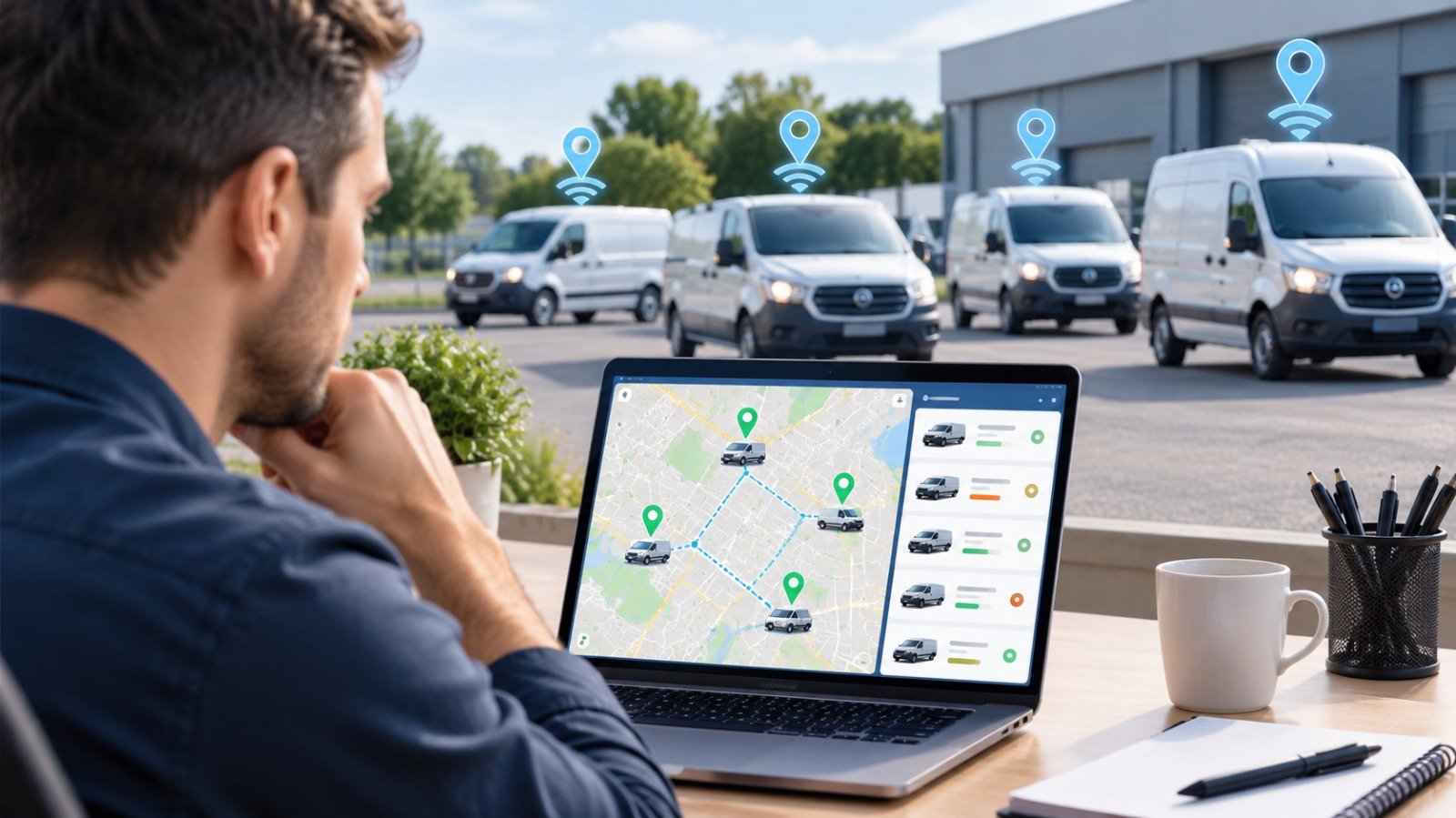
Running a small business with even a handful of vehicles on the road comes with a unique set of headaches — rising fuel costs, unpredictable delivery times, driver safety concerns, and the constant challenge of doing more with a limited budget. For small business owners, every mile driven and every minute spent on the road has a direct impact on the bottom line.
That's where fleet vehicle tracking comes in. Once considered a tool only large logistics companies could afford, GPS fleet tracking has become an accessible, affordable, and genuinely transformative solution for small businesses of every kind — from local delivery services and trade contractors to landscaping crews and mobile repair teams.
At OJB Autocare, we work with small business owners every day who are looking for practical ways to protect their vehicles, control costs, and run a tighter operation. This guide breaks down exactly how fleet vehicle tracking works, why it matters, and the specific benefits it brings to businesses like yours.
What Is Fleet
Vehicle
Tracking?
Fleet vehicle tracking uses GPS-based hardware and software to monitor the real-time location, movement, and performance of vehicles in a business's fleet. A small tracking device is installed in each vehicle, transmitting data to a centralized dashboard that business owners or fleet managers can access from a computer or smartphone.
Modern fleet tracking systems go far beyond simple location pins on a map. They can report on:
Vehicle location and route history
Speed and harsh driving events (hard braking, rapid acceleration)
Idle time and fuel consumption
Engine diagnostics and maintenance alerts
Driver behavior and hours on the road
For small businesses, this means visibility into fleet operations that was once available only to large enterprises with dedicated logistics departments.
Why Fleet
Vehicle Tracking
Matters for
Small
Businesses
Small businesses often operate with tighter margins, smaller teams, and less room for error than larger competitors. A single lost vehicle, an inefficient route, or an unexpected breakdown can create a ripple effect across the entire operation. Fleet tracking directly addresses these vulnerabilities by turning guesswork into data-backed decision-making.
Below are the core benefits small businesses gain from implementing a fleet vehicle tracking system.
1. Improved Fuel Efficiency
and Cost Control
Fuel is one of the largest ongoing expenses for any business with vehicles on the road. Fleet tracking systems identify fuel-wasting behaviors such as excessive idling, harsh acceleration, and inefficient routing.
With this data, small business owners can:
Set idle-time policies and monitor compliance
Identify the most fuel-efficient routes for recurring jobs
Reduce unnecessary mileage from unauthorized vehicle use
Even modest reductions in fuel waste can add up to significant savings over a year, especially for businesses running multiple vehicles daily.
2. Enhanced Driver Safety
and Accountability
Driver behavior directly affects both safety and insurance costs. Fleet tracking systems flag risky habits like speeding, hard braking, and rapid lane changes, giving business owners the insight needed to coach drivers before small issues become costly accidents.
This visibility also encourages a culture of accountability. Drivers who know their behavior is monitored tend to drive more responsibly, which reduces the likelihood of accidents, traffic violations, and vehicle wear.
3. Reduced Vehicle Theft and
Faster Recovery
Commercial vehicles and the equipment inside them are attractive targets for theft. Real-time GPS tracking allows business owners to:
Receive instant alerts if a vehicle moves outside authorized hours or areas
Pinpoint a stolen vehicle's exact location for law enforcement
Set up geofencing alerts around job sites or depots
For small businesses, where a single stolen vehicle can be a major financial setback, this layer of protection is invaluable.
4. Optimized Routing and
Dispatching
Fleet tracking software often integrates route optimization tools that help dispatchers assign the closest available vehicle to a job, avoid traffic delays, and plan multi-stop routes efficiently.
This leads to:
Faster response times for service calls
More jobs completed per day without adding vehicles or staff
Improved customer satisfaction through accurate arrival estimates
5. Preventive Maintenance
and Fewer Breakdowns
Unexpected vehicle breakdowns don't just cost repair money — they cost missed appointments, delayed deliveries, and frustrated customers. Fleet tracking systems monitor engine diagnostics and mileage to trigger maintenance reminders based on actual usage rather than guesswork.
This proactive approach helps small businesses:
Catch mechanical issues before they become expensive repairs
Extend the lifespan of each vehicle
Reduce unplanned downtime that disrupts daily operations
6. Accurate Payroll and Time
Tracking
For businesses that pay drivers or field staff based on hours worked or jobs completed, fleet tracking removes ambiguity. Time stamps for arrivals, departures, and route history provide an accurate record that supports fair payroll practices and reduces time theft.
Learn More: Hardwired vs Battery-Powered Vehicle Trackers: Which One Is Right for Your Car?
7. Lower Insurance Premiums
Many insurance providers offer reduced premiums for businesses that use fleet tracking systems, since the technology demonstrably reduces risk. Documented safe driving behavior, theft recovery capabilities, and reduced accident rates all contribute to a stronger case for lower rates during policy renewals.
8. Better Customer Service
and Transparency
Customers increasingly expect real-time updates, whether it's a delivery window, a service technician's arrival time, or proof that a job site was visited. Fleet tracking allows small businesses to provide accurate ETAs, respond quickly to customer inquiries, and resolve disputes with verified location data.
9. Simplified Regulatory
Compliance
Depending on the industry, small businesses may need to comply with hours-of-service regulations, mileage reporting, or environmental standards. Fleet tracking systems automate much of this documentation, reducing administrative burden and the risk of compliance penalties.
10. Data-Driven Business
Growth Decisions
Perhaps the most underrated benefit is the long-term value of fleet data. Over time, tracking reveals patterns — which routes are least efficient, which vehicles need replacing, which drivers need coaching, and where operational costs are climbing. Small business owners can use this data to make smarter decisions about fleet expansion, budgeting, and staffing.
Choosing the
Right Fleet
Tracking
Solution
Not all fleet tracking systems are built the same, and small businesses should look for solutions that match their scale and budget. Key factors to consider include:
Ease of installation — plug-and-play devices versus professional installation
Real-time vs. periodic updates — how often location data refreshes
Reporting and alerts — customizable notifications for speed, idling, and geofencing
Scalability — the ability to add vehicles as the business grows
Integration — compatibility with existing dispatch, payroll, or maintenance software
At OJB Autocare, we help small business owners evaluate these factors and choose a fleet tracking approach that fits their operation without unnecessary complexity or cost. See our tracking options for business vehicles.
Learn More: Eco Trak fleet tracking options
Final Thoughts
Fleet vehicle tracking is no longer a luxury reserved for large corporations — it's a practical, cost-effective tool that small businesses can use to cut expenses, improve safety, protect assets, and deliver better service. Whether you manage two vehicles or twenty, the visibility and control fleet tracking provides can make a measurable difference in how efficiently your business runs.
If you're a small business owner looking to get more out of your fleet, OJB Autocare is here to help you find the right tracking solution for your operation.
Frequently Asked Questions
1. What is fleet vehicle tracking and
how does it work?
Fleet vehicle tracking uses GPS devices installed in each vehicle to transmit real-time location and performance data to a centralized software dashboard, allowing business owners to monitor their fleet remotely.
2. Is fleet tracking affordable for small
businesses with only a few vehicles?
Yes. Most modern fleet tracking providers offer scalable, subscription-based pricing designed for small fleets, making the technology accessible even for businesses with just two or three vehicles.
3. How does fleet tracking help
reduce fuel costs?
Fleet tracking identifies fuel-wasting behaviors such as excessive idling, harsh acceleration, and inefficient routes, giving business owners the data needed to correct these habits and lower fuel consumption.
4. Can fleet tracking improve driver
safety?
Yes. Fleet tracking systems monitor speeding, harsh braking, and other risky driving behaviors, enabling business owners to coach drivers and reduce the likelihood of accidents.
5. Does fleet tracking help prevent
vehicle theft?
Fleet tracking provides real-time location data and geofencing alerts, allowing business owners to detect unauthorized vehicle movement quickly and assist law enforcement in recovering stolen vehicles.
6. Will using fleet tracking lower my
business insurance premiums?
Many insurance providers offer discounts to businesses using fleet tracking, since it demonstrates reduced risk through safer driving behavior and improved theft recovery capabilities.
7. Can fleet tracking help with vehicle
maintenance?
Yes. Fleet tracking systems monitor engine diagnostics and mileage to send maintenance alerts based on actual vehicle usage, helping prevent breakdowns and extend vehicle lifespan.
8. How does fleet tracking improve
customer service?
Fleet tracking provides accurate real-time location data, allowing businesses to give customers reliable arrival estimates and respond quickly to service inquiries.
9. Is fleet tracking data useful for
payroll purposes?
Yes. Time-stamped location data helps verify driver hours, arrival and departure times, and completed routes, supporting accurate and transparent payroll processes.
10. How do I choose the right fleet
tracking system for my small
business?
Consider factors such as ease of installation, real-time reporting capabilities, scalability, and integration with existing software. OJB Autocare can help assess your specific needs and recommend a suitable solution.