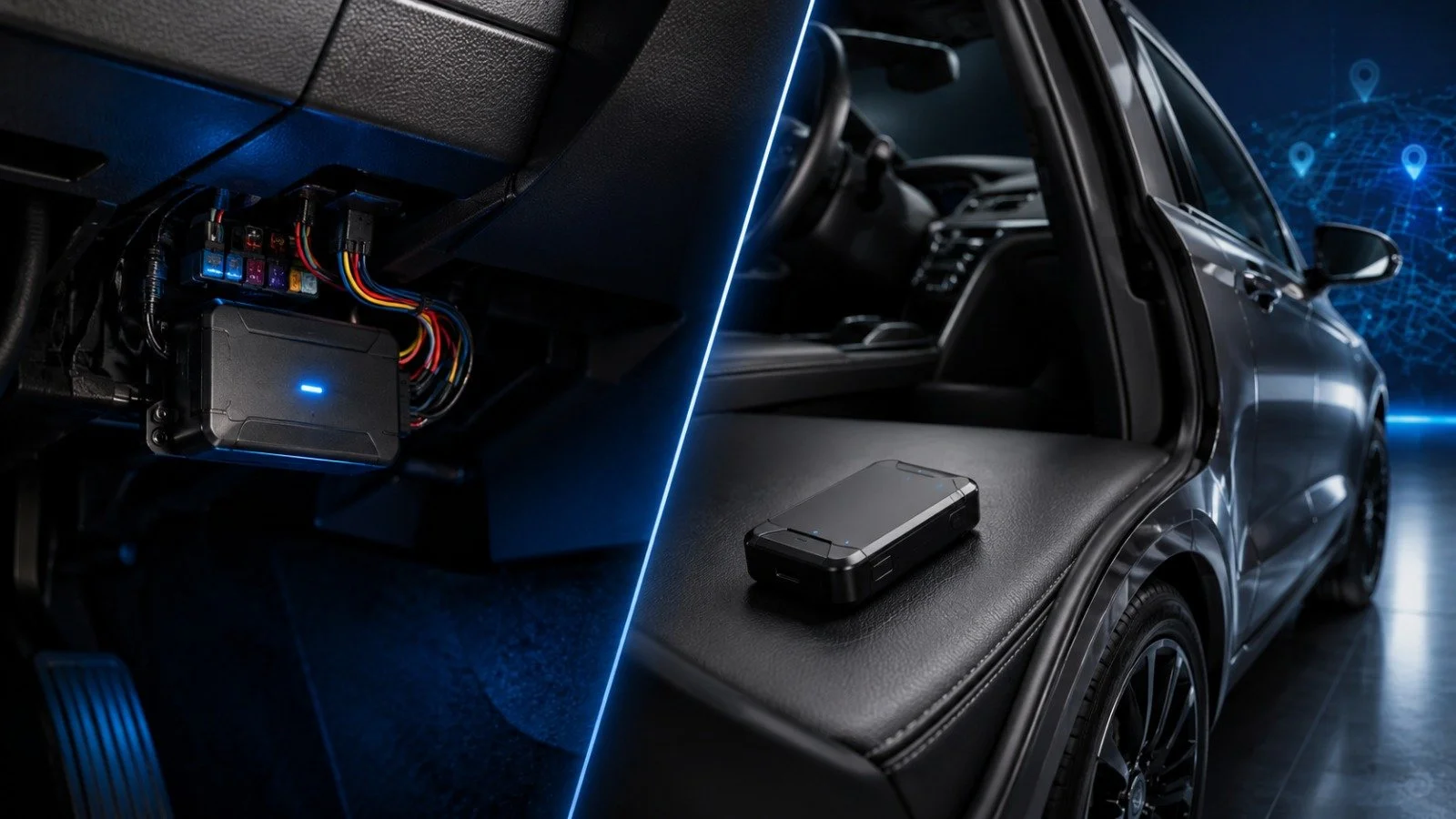
Vehicle theft continues to rise across the UK, and Yorkshire drivers are increasingly turning to GPS tracking technology to protect their vehicles. But once you've decided to invest in a tracker, a bigger question emerges: should you choose a hardwired system or a battery-powered one? At OJB Autocare, we get asked this question almost daily, and the honest answer is that it depends on your vehicle, your driving habits, and what level of protection you're after. This guide breaks down the differences so you can make an informed decision.
Understanding
How Vehicle
Trackers Work
Before comparing the two power options, it helps to understand what a vehicle tracker actually does. A GPS tracker uses satellite positioning combined with mobile network data (GSM/GPRS) to relay your vehicle's real-time location to an app or monitoring platform. Depending on the model, it can also record speed, driving routes, geofencing alerts, and unauthorised movement notifications.
The tracker itself needs a continuous power source to function, and this is where the hardwired versus battery-powered debate begins.
What Is a
Hardwired
Vehicle Tracker?
A hardwired tracker is wired directly into your vehicle's electrical system, typically connected to the ignition circuit or fuse box. Because it draws power straight from the car's battery, it operates continuously without needing to be recharged or replaced.
How Hardwired Trackers Are
Installed
Installation involves a qualified technician accessing your vehicle's wiring, usually behind the dashboard or under the steering column, and connecting the tracker to a constant or ignition-fed power source. At OJB Autocare, our installers ensure the wiring is neatly concealed, tamper-resistant, and doesn't interfere with existing vehicle systems.
Advantages of Hardwired
Trackers
Continuous power supply. Because the tracker draws directly from the vehicle battery, there's no risk of the device running out of charge during a critical moment, such as when a car has been stolen and needs to be located quickly.
Harder to detect and remove. Hardwired units are typically installed in discreet, hidden locations within the vehicle's wiring loom, making them significantly harder for thieves to locate and disable compared to a battery unit that might be spotted and pulled out.
Ignition-sensing capability. Many hardwired trackers can detect when the ignition is switched on or off, allowing for more accurate trip logging, idle time tracking, and movement alerts.
Better suited for fleet and commercial vehicles. Businesses running multiple vehicles benefit from the reliability and low-maintenance nature of hardwired systems, since there's no need to monitor battery levels across an entire fleet.
No recurring maintenance for power. Once installed, there's nothing further to do. You won't need to remember to charge or replace batteries.
Drawbacks of Hardwired
Trackers
Professional installation required. You can't fit a hardwired tracker yourself unless you're confident working with vehicle electrics. Incorrect installation can cause electrical faults.
Less flexible placement. Because it's wired in, moving the tracker to a different vehicle isn't as simple as unplugging and relocating it.
Higher upfront installation cost. Labour costs for professional fitting add to the overall price compared to a plug-and-play battery unit.
What Is a
Battery-
Powered Vehicle
Tracker?
A battery-powered tracker is a standalone device with its own internal battery, meaning it doesn't need to be connected to your vehicle's electrical system at all. These units can simply be placed inside the car, in a boot compartment, under a seat, or even magnetically attached beneath the vehicle.
How Battery-Powered
Trackers Are Installed
There's no wiring involved. You place the device wherever suits, and it starts transmitting location data immediately. Some units are fully wireless and rely solely on an internal rechargeable battery, while others may have a magnetic, weatherproof casing for external mounting.
Advantages of Battery-
Powered Trackers
Quick and easy setup. No technician visit required. This makes battery trackers appealing for anyone who wants immediate protection without booking an installation appointment.
Portability. Because they're not wired into the vehicle, battery trackers can be moved between cars, vans, trailers, caravans, or even placed inside valuable equipment or luggage.
Discreet external placement options. Magnetic, weatherproof battery trackers can be attached to the underside of a vehicle, which can be useful for temporary tracking scenarios or covert monitoring.
Lower initial cost. Without installation labour, battery-powered units are often cheaper to get up and running.
Drawbacks of Battery-
Powered Trackers
Battery life limitations. Depending on usage and tracking frequency, battery life can range from a few days to several months. If the battery dies, you lose visibility over your vehicle's location, which is a serious concern in a theft scenario.
Easier to find and remove. If not concealed well, a battery unit sitting loose in a glovebox or boot can be discovered and discarded by a thief far more easily than a wired-in device.
Ongoing maintenance required. You'll need to periodically check and recharge or replace the battery to keep the device active, which adds a maintenance responsibility that hardwired systems don't have.
Less reliable for continuous monitoring. Frequent GPS pings drain battery faster, so many battery trackers reduce update frequency to conserve power, which can mean slightly delayed location reporting.
Learn More: Do You Need a Tracker, Immobiliser, or Both?
Hardwired vs
Battery-
Powered: A
Direct
Comparison
When choosing between the two, consider these key factors:
Power reliability. Hardwired systems win here, offering uninterrupted operation for as long as the vehicle's battery is functional.
Installation effort. Battery-powered trackers are far quicker to deploy, requiring no professional fitting.
Theft resistance. Hardwired units are generally more secure since they're hidden within the vehicle's wiring and harder to physically remove.
Flexibility. Battery trackers offer more freedom to switch between vehicles or use on non-motorised assets like trailers.
Long-term cost. Hardwired trackers may cost more initially but typically require less ongoing attention, whereas battery units may need repeat purchases of replacement batteries or recharging equipment.
Best use case. Hardwired suits vehicles you own long-term and want maximum theft protection for. Battery-powered suits temporary tracking needs, seasonal vehicles, or asset tracking beyond just cars.
Which Option
Does OJB
Autocare
Recommend?
For most private car owners across Yorkshire looking for serious, long-term theft protection, we generally recommend a hardwired tracker, particularly when paired with a Ghost immobiliser. The combination gives you both prevention (stopping unauthorised engine start) and recovery (locating the vehicle if it is stolen), without the risk of a dead battery leaving you without protection when it matters most.
That said, battery-powered trackers have their place, especially for those who want a low-commitment, easily transferable solution or need to track assets beyond a single vehicle, such as trailers, plant machinery, or caravans.
If you're unsure which suits your situation, our team at OJB Autocare can assess your vehicle, driving habits, and security priorities to recommend the right fit.
Learn More: Best Vehicle Security for Keyless Cars
Final Thoughts
Both hardwired and battery-powered trackers serve valuable purposes, but they're designed for different needs. If long-term, reliable vehicle security is your priority, a hardwired system installed by a trusted specialist offers the strongest protection. If flexibility and quick setup matter more, a battery-powered tracker can still provide meaningful peace of mind.
At OJB Autocare, we install and recommend security solutions tailored to how you actually use your vehicle, not a one-size-fits-all approach. Get in touch with our team to discuss the best tracking solution for your car.
Frequently Asked Questions
1. What is the main difference
between a hardwired and battery-
powered vehicle tracker?
A hardwired tracker connects directly to your vehicle's electrical system for continuous power, while a battery-powered tracker runs on an internal battery and requires no wiring. Hardwired units offer uninterrupted tracking, whereas battery units prioritise flexibility and easy installation over constant power supply.
2. Which type of vehicle tracker is
more secure against theft?
Hardwired trackers are generally more secure because they're installed within the vehicle's wiring loom, often hidden behind the dashboard, making them difficult for thieves to locate. Battery-powered units, if left in accessible spots like a glovebox, can be discovered and removed more easily.
3. Do battery-powered trackers
require regular maintenance?
Yes, battery-powered trackers need periodic attention to ensure the battery stays charged or is replaced when depleted. Depending on the model and GPS update frequency, this could mean recharging every few days to every few months, unlike hardwired systems which need no ongoing power maintenance.
4. Can a hardwired vehicle tracker be
installed on any car?
Most modern vehicles can accommodate a hardwired tracker, as installation involves connecting to the ignition circuit or fuse box. However, professional fitting is recommended to ensure correct wiring and to avoid interfering with other onboard electrical systems.
5. Is a battery-powered tracker
suitable for long-term vehicle
security?
Battery-powered trackers can provide effective short to medium-term tracking, but their reliance on battery life makes them less dependable for long-term, uninterrupted security compared to hardwired systems, which draw continuous power directly from the vehicle.
6. How does a hardwired tracker
affect my car's battery?
When professionally installed, a hardwired tracker draws minimal current and is typically wired to an ignition-fed source rather than a constant one, meaning it shouldn't cause noticeable drain on your vehicle's battery during normal use.
7. Can battery-powered trackers be
used on vehicles other than cars?
Yes, battery-powered trackers are popular for tracking trailers, caravans, plant machinery, and other non-motorised assets since they don't require a wired power connection and can be placed or moved as needed.
8. Which tracker type works best
alongside a Ghost immobiliser?
Hardwired trackers pair particularly well with Ghost immobilisers, as both systems integrate directly into the vehicle's electrics, offering combined theft prevention and stolen vehicle recovery without the risk of battery-related tracking gaps.
9. How long does installation take for
each tracker type?
Battery-powered trackers can be set up in minutes with no professional help required, while hardwired trackers typically take longer since they involve a technician accessing and wiring into the vehicle's electrical system for a secure, discreet installation.
10. Which vehicle tracker option does
OJB Autocare recommend?
For most private car owners seeking long-term theft protection, OJB Autocare generally recommends a hardwired tracker for its reliability and discretion. Battery-powered trackers suit those needing portability or wanting to track additional assets beyond a single vehicle.