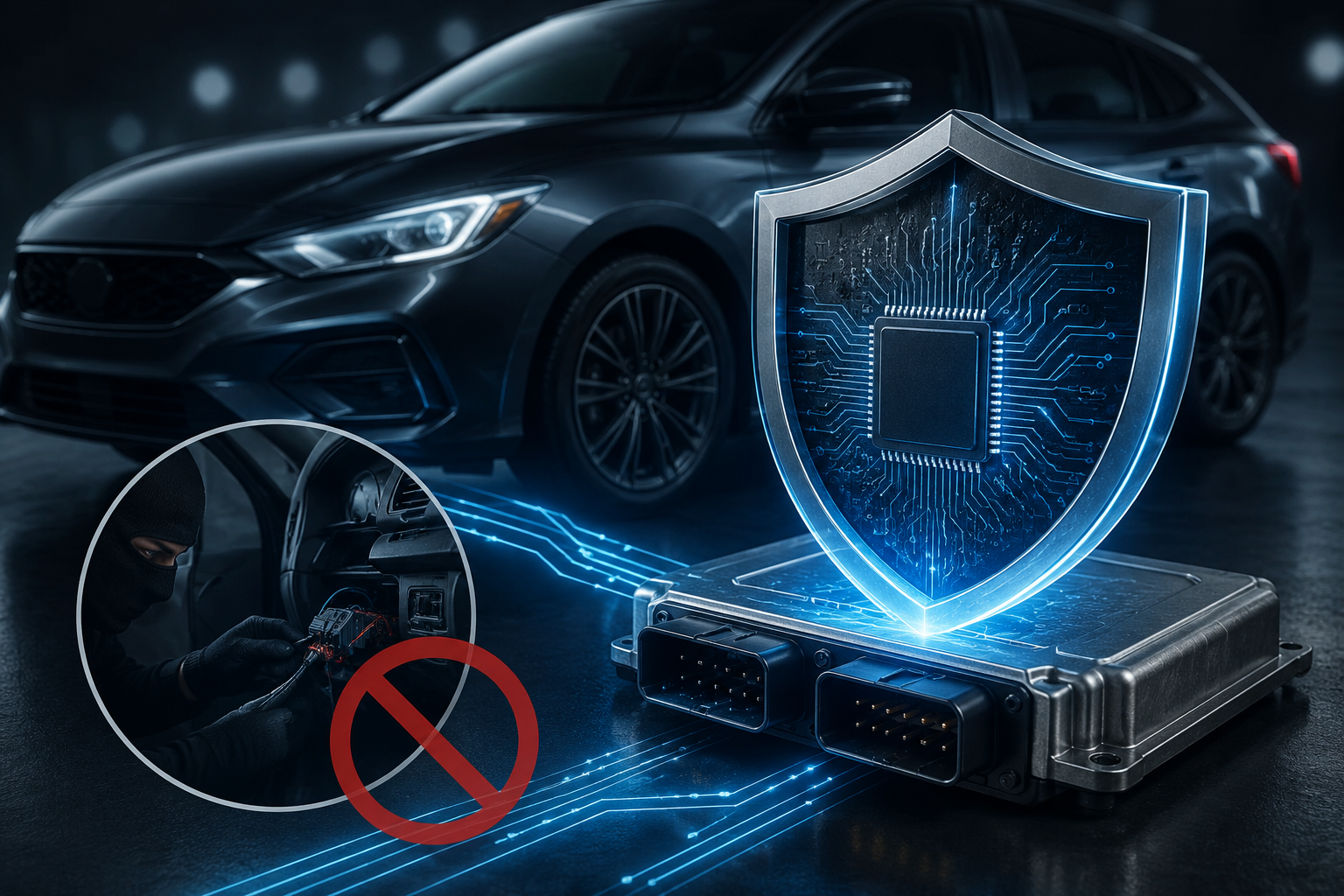
Car theft in the UK has changed. Thieves no longer need to smash a window or hot-wire a dashboard. With relay attacks, key cloning devices, and OBD port hacking now common, criminals can bypass a factory-fitted immobiliser and drive away in under 60 seconds without ever touching your key fob. That shift is exactly why ECU immobilisation has become one of the most effective additions to modern vehicle security, and why more drivers across Yorkshire are asking OJB Autocare to fit one.
What Is ECU
Immobilisation?
ECU immobilisation is a security measure that prevents a vehicle's engine control unit from allowing the engine to start unless a specific, hidden authentication step is completed first. Rather than relying solely on the key fob signal, which can be intercepted or relayed, the system communicates directly with the vehicle's CAN bus network and disables the ability to start the car until it recognises a unique code or sequence known only to the owner.
This means that even if a thief successfully clones your key or relays your fob's signal from inside your house, the car simply won't move.
Why Factory
Immobilisers
Alone Aren't
Enough
Anymore
Every new car sold in the UK has come with a factory-fitted immobiliser since 1998, and for years that was sufficient. The problem is that criminals have caught up with the technology. Factory immobilisers communicate wirelessly with the key fob, and that wireless signal is precisely what relay theft devices are built to intercept.
Once a thief captures and relays that signal, the factory immobiliser doesn't just fail to stop them, it actively authorises the theft, because as far as the ECU is concerned, the correct key is present.
ECU immobilisation closes that gap by removing wireless signal dependency from the equation entirely. Authentication happens through a method the vehicle's existing systems weren't designed to intercept, such as a discreet PIN code entered on a hidden keypad or a recognised button sequence, which keeps the process invisible to signal-scanning equipment.
How ECU
Immobilisation
Actually Works
Unlike aftermarket alarms that sit on top of a vehicle's existing electronics, ECU immobilisation integrates directly into the CAN bus, the internal network that allows a car's electronic components to communicate with one another. Installation is done via the OBD port and takes advantage of the vehicle's own architecture rather than adding bulky external hardware.
Once fitted, the system requires a unique disarm sequence before the ECU will permit ignition. This could be:
A PIN code entered on a discreet numeric keypad
A specific pattern of button presses on the existing switchgear (indicators, hazards, or steering wheel controls)
A combination of both, for layered authentication
Because there's no additional fob, transmitter, or wireless signal involved, there's nothing for relay devices, signal amplifiers, or OBD hacking tools to latch onto. The vehicle effectively becomes invisible to the electronic methods most car thefts rely on today.
Learn More: What Is Valet Mode on a Ghost Immobiliser?
The Difference
Between a
Tracker, an
Alarm, and ECU
Immobilisation
These three technologies often get lumped together, but they serve different purposes:
Alarms alert you and bystanders that something is wrong, but they don't physically stop a vehicle from being driven away.
Trackers help recover a vehicle after it's already been stolen, which is valuable, but reactive by nature.
ECU immobilisation stops the theft before it starts by preventing the engine from running in the first place.
Used together, these three layers create what's known in the industry as defence in depth: the vehicle resists theft, alerts if compromised, and remains traceable even in a worst-case scenario. Most insurers and security assessors now recommend this combined approach rather than relying on any single system.
Why This
Matters More
for Keyless
Vehicles
Keyless entry and keyless start systems are convenient, but they've also become the primary target for organised vehicle theft in the UK. Relay attack devices are inexpensive, widely available, and require no technical skill to operate. Any vehicle with proximity key access is a potential target, regardless of make, model, or price point.
ECU immobilisation is particularly effective here because it doesn't try to secure the key signal, it removes reliance on that signal altogether. The vehicle simply won't start without the hidden authentication step, which makes it irrelevant whether a thief has successfully captured your fob signal or not.
How OJB
Autocare
Approaches
ECU
Immobilisation
At OJB Autocare, every ECU immobilisation system is installed by trained technicians who understand vehicle-specific CAN bus architecture rather than applying a generic, one-size-fits-all approach. Correct installation matters: a poorly fitted system can create fault codes, drain the battery, or interfere with the vehicle's other electronics. For the Ghost option, see our Ghost immobiliser installation service.
We fit systems that are Thatcham-approved where applicable, meaning they meet recognised insurance industry standards and, in many cases, can help with insurance premium reductions. Every installation is discreet by design, so the added protection stays invisible to anyone who isn't meant to know it's there, including a thief who's already inside the car.
Learn More: Can a Ghost Immobiliser Be Bypassed or Removed?
Protect Your
Vehicle Beyond
the Factory
Standard
Factory security was never designed to withstand the tools available to today's car thieves. ECU immobilisation gives Yorkshire drivers a genuine, invisible layer of protection that works quietly in the background, ready the moment it's needed.
If you'd like to find out whether ECU immobilisation is right for your vehicle, get in touch with OJB Autocare for a consultation.
Frequently Asked Questions
What is ECU immobilisation?
ECU immobilisation is a vehicle security system that prevents the engine control unit from allowing ignition unless a hidden authentication step, such as a PIN code or button sequence, is completed first. Unlike factory immobilisers, it doesn't rely on a wireless key signal, making it far more resistant to relay theft and signal cloning.
How does ECU immobilisation stop
car theft?
It stops theft by disabling engine start at the source. Even if a thief clones your key fob or relays its signal, the ECU won't authorise ignition without the correct hidden sequence. This removes the vehicle's dependency on wireless key communication, which is the exact weakness most modern car thieves exploit.
Is ECU immobilisation different from
a factory-fitted immobiliser?
Yes. Factory immobilisers communicate wirelessly with the key fob, which makes them vulnerable to relay attacks and signal amplification. ECU immobilisation removes that wireless dependency entirely, requiring a discreet manual authentication step instead, making it significantly harder for thieves to bypass using off-the-shelf relay devices.
Does ECU immobilisation protect
against keyless car theft?
Yes, and this is where it's most effective. Keyless entry vehicles are the primary target for relay attacks because their key signals can be intercepted remotely. Since ECU immobilisation doesn't depend on that signal at all, the vehicle remains inoperable even if the key fob's signal has already been compromised.
How is ECU immobilisation installed?
It's installed directly through the vehicle's OBD port, integrating with the CAN bus network that connects the car's electronic systems. A trained technician programs a unique disarm sequence, such as a PIN or switchgear pattern, so the system works invisibly alongside the vehicle's existing electronics without external wiring.
Will ECU immobilisation affect my
insurance premium?
It can help lower premiums, particularly when the system is Thatcham-approved. Many UK insurers recognise Thatcham-category security devices as reducing theft risk, which can translate into reduced comprehensive cover costs. It's worth confirming directly with your insurer, as discounts vary by provider and vehicle type.
Can ECU immobilisation be
bypassed like a standard
immobiliser?
It's considerably harder to bypass. Standard immobilisers can be defeated because they trust any signal matching the key fob's frequency, which relay devices replicate. ECU immobilisation requires a manual, hidden authentication step that isn't broadcast wirelessly, so there's no signal for theft devices to intercept or amplify.
Do I still need a tracker if I already
have ECU immobilisation?
Yes, they serve different purposes. ECU immobilisation prevents the engine from starting in the first place, while a tracker helps recover the vehicle if it's taken by other means, such as flatbed theft. Used together, they provide layered protection: prevention first, recovery as a backup.
Is ECU immobilisation suitable for all
vehicle makes and models?
Most vehicles with a CAN bus network, which includes the vast majority of cars built in the last two decades, are compatible with ECU immobilisation. Compatibility can vary slightly by make, model, and existing electronics, so a vehicle-specific assessment is recommended before installation to confirm fitment.
Does fitting ECU immobilisation void
my manufacturer warranty?
When installed correctly by a qualified, Thatcham-approved technician, ECU immobilisation should not void your manufacturer warranty. Reputable installers use approved fitting methods that don't interfere with existing vehicle systems. If you have concerns, it's advisable to confirm directly with your dealer before installation.