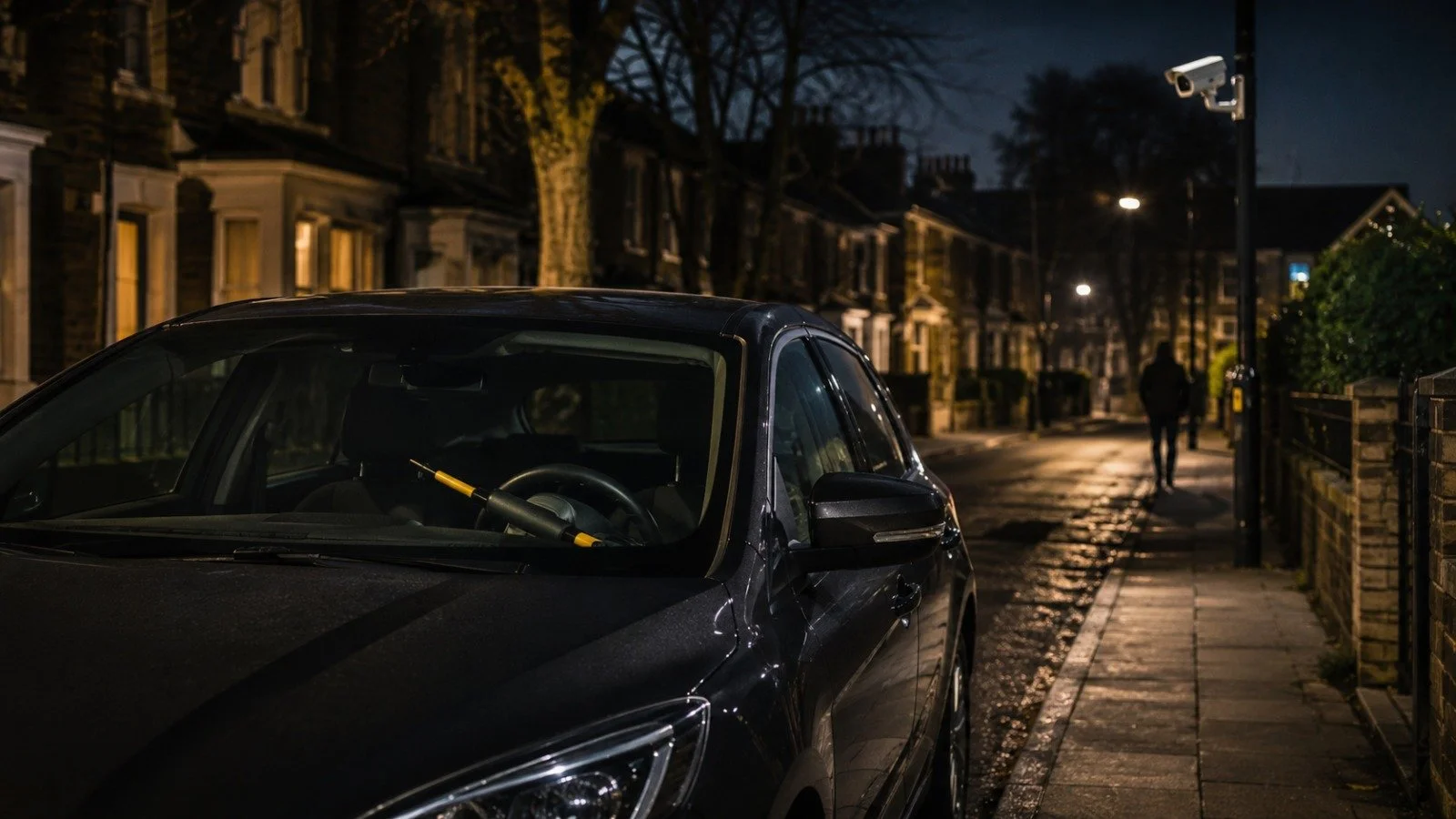
A car becomes high theft risk in 2026 when it is attractive to thieves, easy enough to target, profitable to resell or strip for parts, and exposed in the wrong location. For UK drivers, this risk is shaped by more than the badge on the bonnet. Keyless entry systems, relay devices, insurance group ratings, parts demand, parking habits, vehicle age, and local crime patterns all play a part.
At OJB Autocare, we look at vehicle theft risk in practical terms: how thieves target cars, why certain models become popular with organised criminals, and what owners can do before the worst happens. The big takeaway is simple: a car is not high risk for one reason; it becomes high risk when value, vulnerability, and opportunity line up.
Quick Answer:
What Makes a
Car
High Theft Risk?
The main factors UK drivers
should know
A vehicle is more likely to be classed as high risk when it has:
A known theft vulnerability, such as keyless relay exposure, weak immobiliser protection, or accessible diagnostic ports.
High demand for parts, including headlights, bumpers, catalytic converters, wheels, airbags, ECUs, and infotainment units.
Strong resale or export value, especially for SUVs, premium cars, performance models, and popular family vehicles.
A high local theft rate, particularly in urban areas or locations with organised vehicle crime.
Poor parking security, such as street parking, dark driveways, open car parks, or no CCTV coverage.
No visible deterrents, such as a steering lock, tracker sticker, driveway post, or wheel clamp.
Keyless entry without extra protection, especially if keys are kept near doors or windows.
Insurance and security rating concerns, including weak Thatcham security assessment outcomes.
Popular model status, because common vehicles are easier to strip, sell, disguise, or clone.
Owner habits that make theft easier, such as leaving valuables visible, failing to double-check locking, or leaving a car running unattended.
Vehicle theft in the UK has become more technology-led. RUSI’s 2025 analysis noted that UK vehicle theft declined for many years before rising again, with Home Office data showing vehicle theft incidences up by 75% over the past decade. The same report links the increase to technologically enabled methods and international stolen vehicle markets.
Why “High Theft
Risk” Means
More Than
“Most Stolen”
Most stolen cars are not
always the riskiest cars
A car can appear on a “most stolen” list simply because there are so many of them on UK roads. For example, a common hatchback or family SUV may be stolen frequently because thieves see them everywhere. That does not automatically mean every individual owner faces the same risk.
In contrast, a rarer high-performance car may have fewer total thefts but a much higher theft rate relative to the number registered. That is why insurers, police, and vehicle security experts look beyond raw numbers. They consider model year, trim level, technology, location, claims history, repair cost, and replacement value.
Risk is local, not just national
A car parked overnight in a locked garage in a quiet village has a different risk profile from the same car parked on a busy street in a high-crime urban area. Therefore, UK drivers should think in terms of personal theft exposure, not just national headlines.
For example, OJB Autocare would advise a customer to consider where the vehicle is parked, how the keys are stored, whether the car has keyless entry, whether a tracker is fitted, and whether the model is commonly targeted in that area.
Keyless Car
Theft and
Electronic
Attacks
Why keyless vehicles are
targeted
Keyless entry and push-button start systems are convenient, but they can also be exploited. In a relay attack, criminals use electronic devices to extend or copy the signal from a key fob, tricking the vehicle into thinking the key is nearby. The thief does not need to smash a window or force the ignition. The whole point is speed and silence.
The UK Government’s Crime and Policing Act 2026 factsheet states that the Act introduces offences covering possession, importation, making, adapting, supplying, or offering to supply electronic devices such as signal jammers for use in vehicle theft. The maximum penalty is five years’ imprisonment, an unlimited fine, or both.
Why 2026 is a turning point
The law has tightened because electronic theft equipment has become a serious problem. The same government factsheet says the Metropolitan Police Service estimates that electronic devices are used in approximately 60% of vehicle theft in London.
Thatcham Research also welcomed the Crime and Policing Act 2026, saying it targets possession and supply of electronic theft devices, including relay attack tools and key emulation devices. Thatcham noted that modern vehicle theft is now driven less by casual joyriding and more by sophisticated organised criminal gangs using specialist electronic equipment.
That is the modern reality. The thief is not always a person with a screwdriver. Sometimes it is someone with a laptop, a signal device, and a very disappointing moral compass.
Vehicle Security
Ratings and
Insurance Risk
How Thatcham Research
affects the conversation
In the UK, Thatcham Research plays a major role in vehicle security assessment. It provides security assessments for new models through the New Vehicle Security Assessment programme, and those results feed into the insurance industry’s Group Rating process. This helps insurers identify theft risk exposures linked to specific models and technologies.
In plain English, insurers are not guessing. They look at the car’s security design, claims experience, repair cost, parts price, theft exposure, and recovery risk. As a result, two cars with similar purchase prices can have very different insurance outcomes.
Why high theft risk can affect
premiums
If a model is commonly stolen, expensive to repair, difficult to recover, or frequently stripped for parts, insurers may treat it as a higher risk. RAC guidance explains that stolen vehicles are typically covered under comprehensive car insurance, while third-party-only insurance does not cover theft of your own vehicle.
That means UK drivers should check insurance quotes before buying a car, not after falling in love with it. The heart may want the premium SUV. The insurer may have other plans.
Parts Demand:
Why Thieves
Target Ordinary
Cars Too
Stolen cars are not always
sold whole
Some stolen vehicles are exported or cloned, but many are dismantled for parts. A common model can be highly attractive because parts are easy to sell. Bumpers, bonnets, doors, alloy wheels, headlights, airbags, catalytic converters, infotainment screens, control modules, and hybrid components can all have value.
This is why everyday vehicles can become high-risk targets. A family car might not look exotic, but if thousands of drivers need replacement parts, thieves see opportunity.
Popular models create easy
supply chains
The more common the vehicle, the easier it can be to disguise stolen parts. That does not mean drivers should avoid popular cars altogether. It means they should understand that popularity cuts both ways: easier servicing and parts availability for honest owners, but also more demand in illegal parts networks.
Learn More: How Criminals Hack Car Key Signals (Relay Attack Explained)
Location and
Parking Habits
Where a car sleeps matters
A vehicle’s risk profile changes dramatically based on where it is parked. Police.uk advises drivers to avoid dark and secluded areas, use well-lit or staffed car parks where possible, keep keys away from the front door, and store keyless fobs in a signal-blocking pouch such as a Faraday bag.
The old advice still works because thieves still prefer easy targets. A visible steering lock, locked driveway post, CCTV camera, or well-lit parking space may be enough to make a thief move on to a softer target.
Driveways are not
automatically safe
Many keyless thefts happen from driveways because criminals can stand near the house, capture the key signal, and open the car without entering the property. Therefore, storing keys near the front door, hallway table, or kitchen window is a bad habit.
A better routine is simple: keys away from doors and windows, spare keys protected too, Faraday pouch tested regularly, and the vehicle manually checked after locking.
What OJB
Autocare
Recommends
Before Buying a
Car
A practical high-theft-risk
checklist
Before buying a vehicle in 2026, use this checklist:
Check the insurance quote first. Use the exact registration or VIN where possible.
Research the model’s theft reputation. Look for UK theft reports, owner forums, recalls, and security updates.
Ask whether it has keyless entry. If yes, check whether the fob can be disabled.
Confirm immobiliser and alarm features. Factory security varies by model year and trim.
Check for software updates. Some manufacturers release anti-theft updates after known vulnerabilities.
Inspect the V5C and VIN numbers. Police.uk advises checking the DVLA V5 document and matching the VIN on the car when buying used.
Look for signs of cloning. Mismatched plates, unusual history gaps, or suspiciously cheap pricing should raise concern.
Consider tracker compatibility. Some insurers prefer approved tracking systems on higher-value vehicles.
Review parking reality. Street parking changes the equation.
Budget for security. A £50–£150 deterrent can be cheaper than an insurance excess, lost time, and a ruined week.
This is where OJB Autocare’s message to UK drivers is straightforward: do the checks before money changes hands. Prevention is boring, yes. So is wearing a seatbelt. Both are wise.
How to Reduce
Car Theft Risk in
2026
Practical steps for UK vehicle
owners
Use a Faraday pouch for keyless fobs and spare keys.
Keep keys away from doors and windows at home.
Use a steering wheel lock as a visible deterrent.
Fit an approved tracker if the vehicle is high value or high risk.
Consider an aftermarket immobiliser approved by the manufacturer or insurer. Ask us about Ghost immobiliser installation and check vehicle compatibility before booking.
Check the vehicle is locked manually before walking away.
Avoid leaving valuables visible inside the car.
Park in well-lit areas or secure car parks.
Use driveway security, such as posts, gates, or CCTV.
Secure the diagnostic port if the vehicle is vulnerable to OBD-based theft.
Police.uk specifically recommends keeping keys safe, using Faraday-style signal-blocking protection for keyless fobs, fitting good in-car security locks, checking electronic locking, and considering a lockable cover for diagnostic ports on modern vehicles.
People Also Ask
About High-
Theft-
Risk Cars
What makes a car high theft
risk in the UK?
A car is high theft risk when it has a combination of theft appeal, weak security, strong parts demand, local targeting, and poor parking protection. Keyless entry vulnerabilities, high resale value, and expensive components can increase the risk.
Are keyless cars easier to
steal?
Some keyless cars can be vulnerable to relay attacks if the key signal is not protected. Using a Faraday pouch, keeping keys away from doors and windows, and disabling the keyless signal where possible can reduce the risk.
Does a steering wheel lock
still help in 2026?
Yes. Even though modern theft is increasingly electronic, a visible physical lock adds time and effort. Many thieves prefer quick, low-risk thefts, so old-school deterrents still have value. Sometimes the classics earn their keep.
Can car theft risk increase
insurance costs?
Yes. If a vehicle has frequent theft claims, expensive replacement parts, poor recovery rates, or weak security, insurers may price that risk into the premium. Always compare insurance quotes before buying a vehicle.
What should I do if my car is
stolen?
Report it to the police immediately, contact your insurer, provide tracker information if available, and avoid confronting suspects yourself. If the vehicle is recovered, it may still need inspection for damage, tampering, or hidden faults.
Learn More: what to do if your car gets stolen
Conclusion: OJB
Autocare’s
Advice for UK
Drivers
A high-theft-risk car in 2026 is not defined by badge alone. It is shaped by technology, location, parts demand, insurance data, security ratings, owner habits, and criminal trends. Keyless systems, electronic theft devices, vehicle cloning, stolen parts markets, and organised crime have changed the landscape, but drivers still have practical ways to reduce risk.
OJB Autocare recommends a layered approach: research before buying, check insurance early, protect keyless fobs, use visible deterrents, secure your parking routine, and keep your vehicle’s security systems updated. A thief wants speed, silence, and simplicity. Your job is to give them none of the above.